Bhadradri Sita Ramachandraswamy Temple, Bhadrachalam
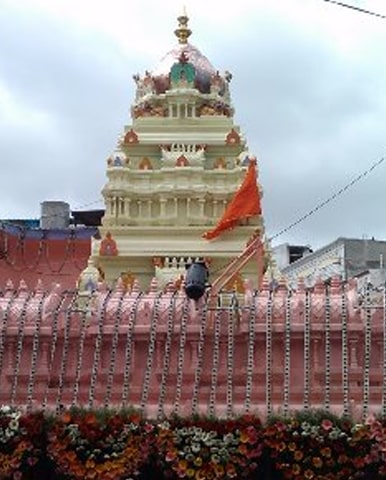
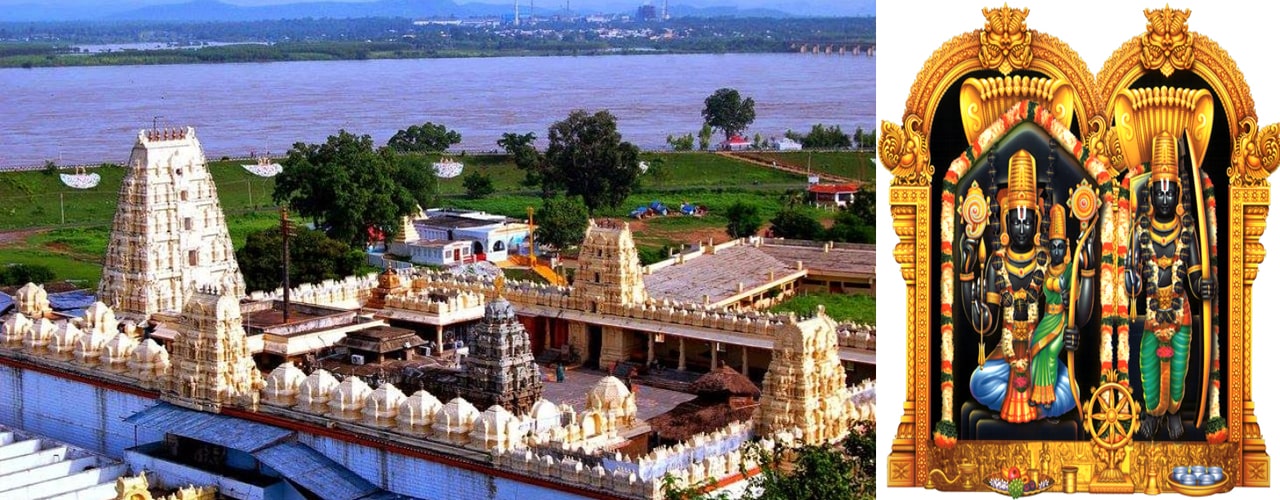
The Sri Sita Ramachandraswamy temple is a South Indian Hindu temple dedicated to Rama, the seventh incarnation of the god Vishnu. It is located on the shores of the Godavari River in the town of Bhadrachalam, a part of the Bhadradri Kothagudem district in Telangana state. Often simply referred to as Bhadrachalam or Bhadradri, the temple is considered one of the Divya Kshetrams of Godavari and is also revered as Dakshina Ayodhya. According to the legend, Vishnu appeared to Meru's son Bhadra as Rama to answer the latter's prayers. However, Vishnu forgot that Rama was a mortal human and appeared as Vaikuntha Rama with four hands. Sita and Lakshmana form part of the temple's moolavar.
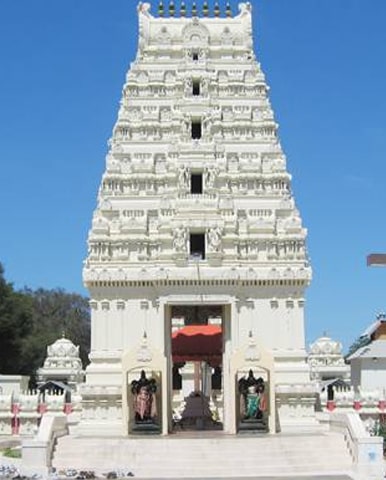
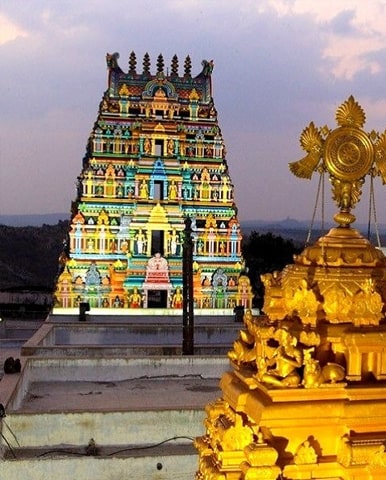
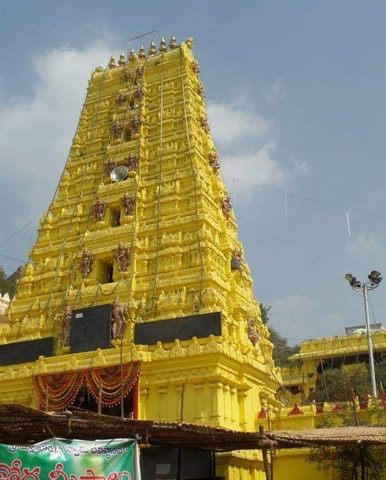
The self-manifested moolavirat was discovered in the 17th century by Pokala Dhammakka, a tribal woman living in Bhadrareddypalem. After she built a mandapam for the idols, Bhadrachalam's tehsildar Kancherla Gopanna constructed this temple during the reign of Abul Hasan Qutb Shah. After Gopanna, Tumu Lakshmi Narasimha Dasu and Varada Ramadasu looked after the temple's rituals. Bhadrachalam follows the Vaishnavite Pancharatra Agama tradition, and its system of worship is modelled on that of the Ranganathaswamy temple in Srirangam. The temple has four entrances; the Rajagopuram is located at the northern entrance, which is called the Vaikuntha Dwaram. The temple houses a number of sub-shrines and a few mandapams.
Bhadrachalam is notable for its principal deity Rama. According to the Brahma Purana, the temple's deity is capable of imparting knowledge to those who worship him. Gopanna used Bhadrachalam as a centre of the Bhajan tradition to spread awareness of the Vaishnavite tradition. The annual Brahmotsavam is the biggest festival celebrated in Bhadrachalam; the key event is the Sri Sitarama Thirukalyana Mahotsavam, or the marriage of Rama and Sita on the eve of Sri Rama Navami. Other important festivals celebrated in Bhadrachalam are Vaikuntha Ekadashi, Vasanthotsavam, and Vijayadashami.
In the 17th century CE, Pokala Dhammakka, a tribal woman living in Bhadrareddypalem, found the central icon of Rama in an anthill. She dissolved the anthill using the water from the Godavari River. With the help of the villagers, Dhammakka constructed a mandapam (hall) and offered prayers to the deities.During the reign of Abul Hasan Qutb Shah (1672-1686), Kancherla Gopanna served as the tehsildar (revenue officer) of Bhadrachalam.Gopanna was given the title of Ramadas (Rama's servant) by Kabirdas, a Muslim saint who was impressed with his charity.Following the Shah's orders, Gopanna enforced the Jaziya tax, a penalty designed to force Hindus to adopt Islam.Observing the dilapidated state of the temple, Gopanna decided to build a temple for the deity by raising donations.In the initial attempt, Gopanna received harsh criticism from the local Hindus for enforcing the tax. Dejected by numerous rebuffs, Gopanna decided to use a portion of the tax collected to build the temple and face the consequences.
The temple was completed at a cost of nearly six lakh varahas.After learning the truth, the Shah was enraged, and Gopanna was summoned to the court. Gopanna explained that he never intended to misuse the treasury funds and planned to reimburse using donations he expected to receive in the future.The Shah ordered his soldiers to hang Gopanna if the sum was not repaid within twelve years, and imprisoned him.On the last day of the twelfth year,Rama and Lakshmana appeared in Shah's dream and repaid the entire sum in Rama madas (gold coins with Rama's inscriptions on them). When the Shah woke up, he saw real gold coins and released Gopanna.He gave Gopanna a pension for life and donated the area around Bhadrachalam as an endowment to the temple.Some scholars dismissed the idea of Rama paying the money, saying that the Shah had held a fair and impartial inquiry, found Gopanna innocent, and exonerated him with due Honor.
Years later, Tumu Lakshmi Narasimha Dasu of Guntur and his friend Varada Ramadasu of Kanchipuram offered prayers daily at Bhadrachalam and spent their life there. After Varada Ramadasu's death, Narasimha Dasu carried his corpse into the Godavari and died by drowning.
The temple was a part of the Godavari district until the end of the Visalandhra movement, after which the town was merged into Khammam district in 1956.The temple's maintenance and administration were undertaken by the endowment ministry of the Government of Andhra Pradesh in 1958. Repairs were made to the temple in 1960 under the supervision of the then-endowments minister Kalluri Chandramouli.
In August 1986 the temple faced a severe threat from flash floods in the Godavari River. The main streets and several structures, including cottages, were submerged in water for nearly five days. Many local people took shelter in the halls of the temple. The kalyana mandapam (marriage hall) was completely inundated except for its gopuram (temple tower). P. Seshacharyulu and other priests stayed in the temple and performed all the daily rituals without any interruption during the floods.
The Nizam of Hyderabad, Mir Osman Ali Khan during his time made a huge donation of Rs. 50,000 for this temple during his time.
Source : Wikipedia
TrasnportBy Road: Bhadrachalam is well connected to all the major cities in Andhra Pradeshby state-owned bus services that frequently ply from all the major cities toBhadrachalam.
By Train: Bhadrachalam Road station is the nearest railway station, which is alsoknown as Kothagudem and is located just 40 kilometres from theBhadrachalam town. You can hire a taxi from the railway station that willtake you to Bhadrachalam.
By Air: Rajahmundry Domestic Airport is the nearest airport toBhadrachalam, which is about 117 kilometres and the nearestinternational airports are at Hyderabad and Chennai, which are both325kms away from Bhadrachalam. From here you can hire a taxi toreach Bhadrachalam.