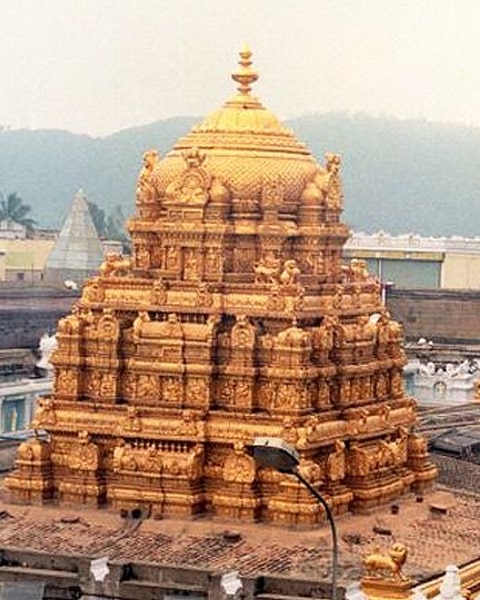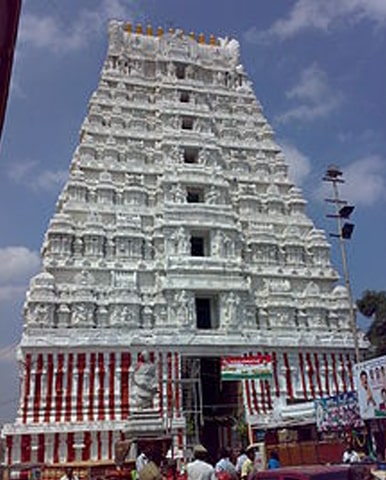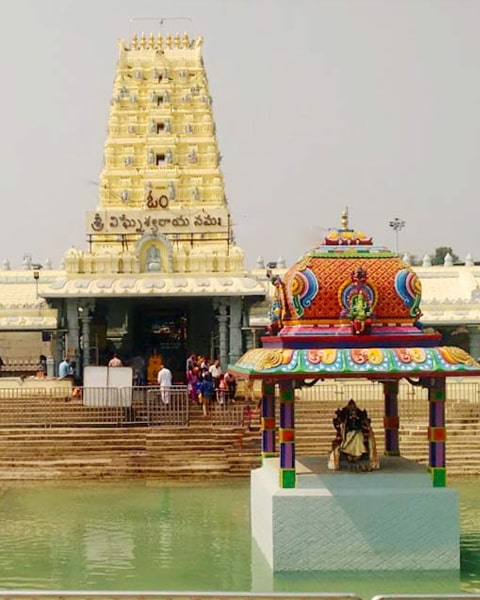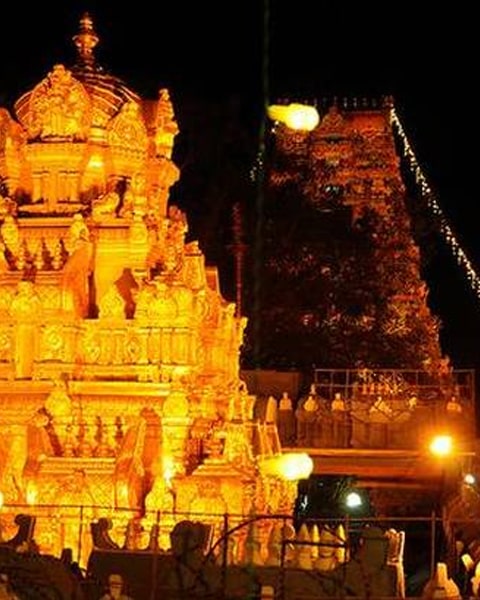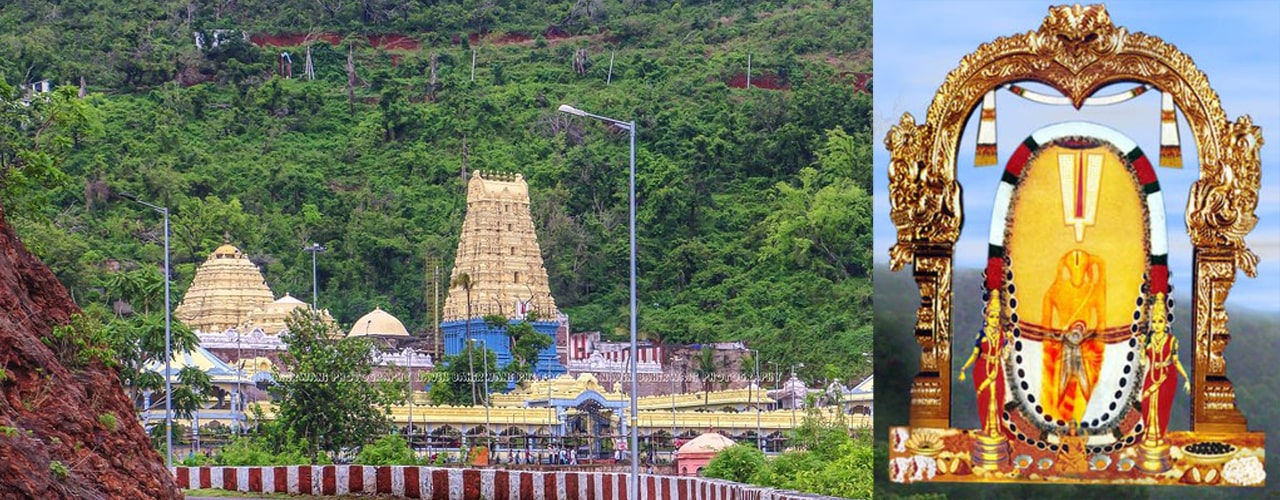
Sri Varahalakshmi Narasimha Swamy Temple, Simhachalam
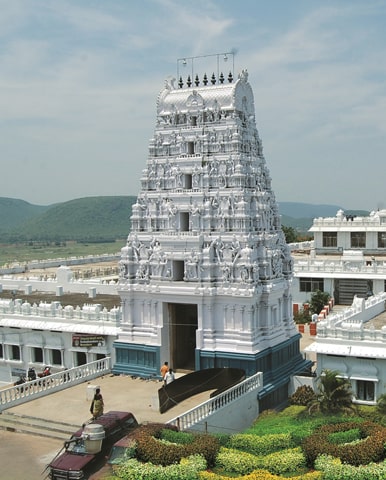
Sri Varaha Lakshmi Narasimha temple, Simhachalam is a Hindu temple situated on the Simhachalam Hill Range, which is 300 metres above the sea level in Visakhapatnam, Andhra Pradesh. It is dedicated to Vishnu, who is worshipped there as Varaha Narasimha. As per the temple's legend, Vishnu manifested in this form (lion's head and human body) after saving his devotee Prahlada from a murder attempt by the latter's father Hiranyakashipu. Except on Akshaya Trutiya, the idol of Varaha Narasimha is covered with sandalwood paste throughout the year, which makes it resemble a linga.
Simhachalam is one of the 32 Narasimha temples in Andhra Pradesh which are important pilgrimage centres. It was regarded as an important centre of Vaishnavism in the medieval period along with Srikurmam and others. The earliest inscription at the temple belongs to 11th-century CE recording the gift by a private individual in the era of Chalukya Chola king Kulottunga I. In the later half of the 13th century, the temple complex underwent radical physical changes during the reign of the Eastern Ganga king Narasimhadeva I. Narahari Tirtha, a Dvaita philosopher and Eastern Ganga minister converted the Simhachalam temple into an educational establishment of renown and a religious centre for Vaishnavism.It later received patronage from many royal families, of which Tuluva dynasty of Vijayanagara Empire is a notable one. The temple underwent 40 years of religious inactivity from 1564 to 1604 CE. In 1949, the temple came under the purview of the state government and is currently administered by the Simhachalam Devasthanam Board.
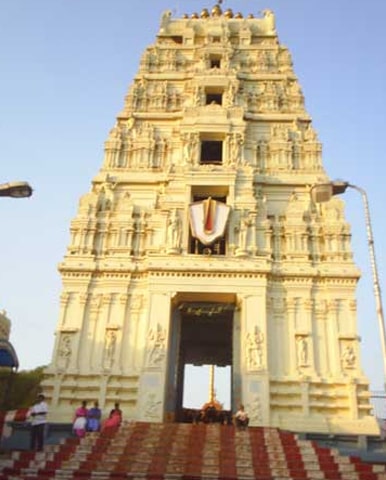
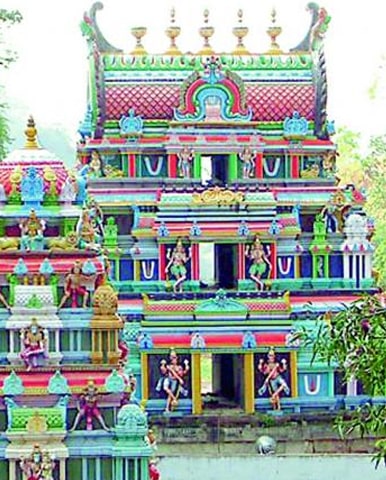
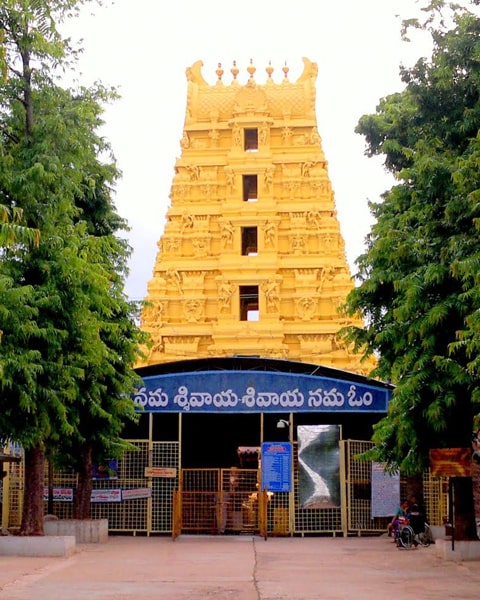
Simhachalam temple resembles a fortress from outside with three outer courtyards and five gateways. The architecture is a mixture of the styles of the Kalinga Architecture, Chalukyas, Kakatiyas, and the Cholas.The temple faces west instead of east, signifying victory. There are two temple tanks: Swami Pushkarini near the temple and Gangadhara at the bottom of the hill. The temple houses a number of sub-shrines and a few mandapams. The religious practices and customs of the temple are formulated by the Vaishnavite philosopher Ramanuja. They are modelled based on the Satvata Samhita, one of the 108 texts of the Pancharatra Agama.
Simhachalam is the second-largest temple, after Tirumala in Andhra Pradesh, in terms of income earned.Devotees believe that the deity is capable of giving progeny to women and fulfilling the wishes of devotees. Kalyanotsava and Chandanotsava are the two major festivals celebrated in the temple, followed by Narasimha Jayanti, Navaratrotsava and Kamadahana. The festivals celebrated in Simhachalam have an influence of the Dravida Sampradaya. Apart from those by well-known poets, the temple is found in many literary references and lyrical works (dedicated by anonymous writers), which are preserved in the Government Oriental Manuscripts Library, Source : Wikipedia
TrasnportBy Road: Simhachalam can be accessed by road from Simhachalam Bus Depot by APSRTC city buses, which is 4.4 kilometers, or by Simhachalam Temple Bus Service. APSRTC operates frequent buses from Dwaraka RTC complex in Visakhapatnam city which is 19.9 kilometers to SimhachalamTemple.
By Train: The nearest railway station is at Simhachalam, about 11.1 kilometres from Simhachalam Temple. Visakhapatnam railway station is the main station which is about 18.5 kilometers.
By Air: The nearest airport is at Vishakhapatnam, which is well connected with flights from all major cities.