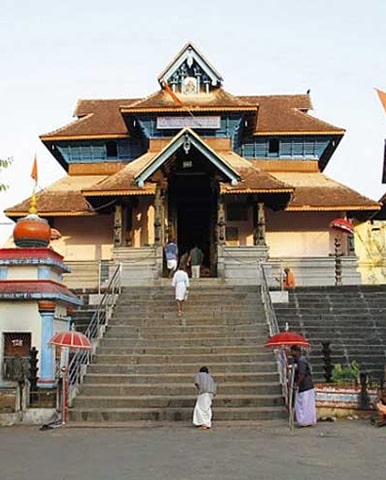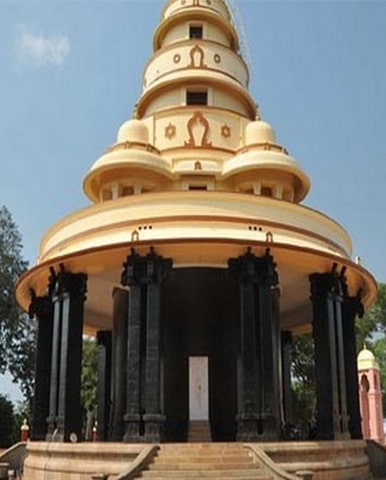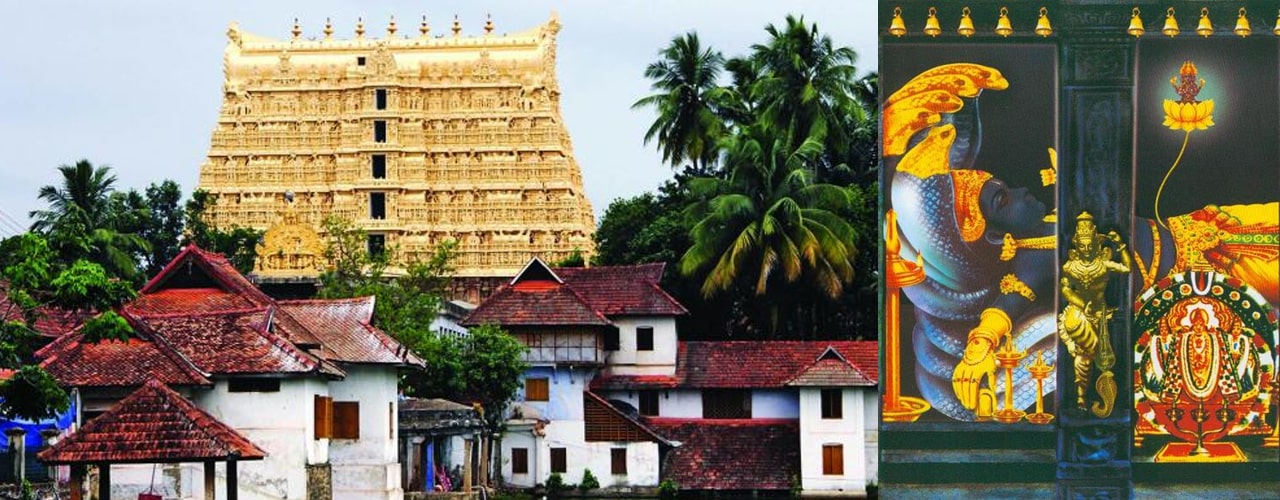
Sree Padmanabhaswamy Temple, Thiruvananthapuram
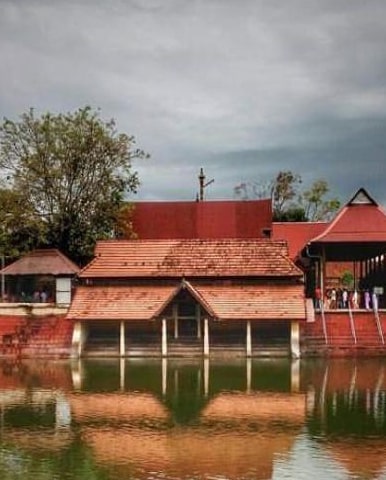
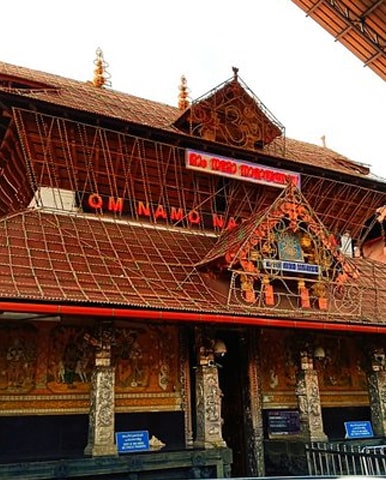
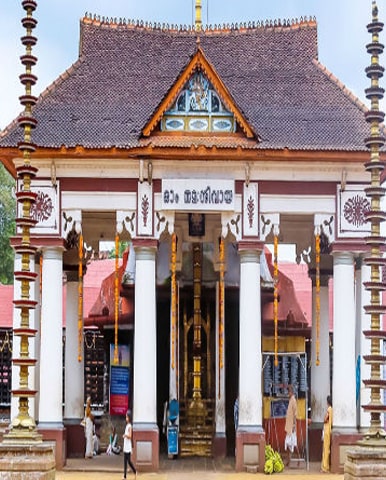
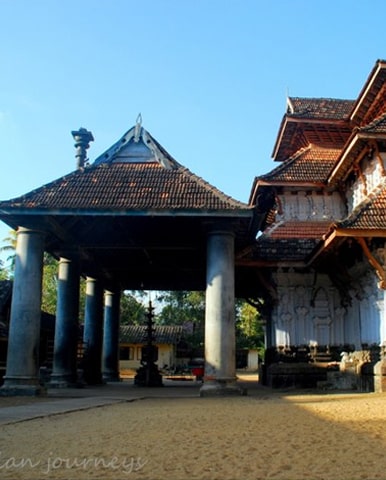
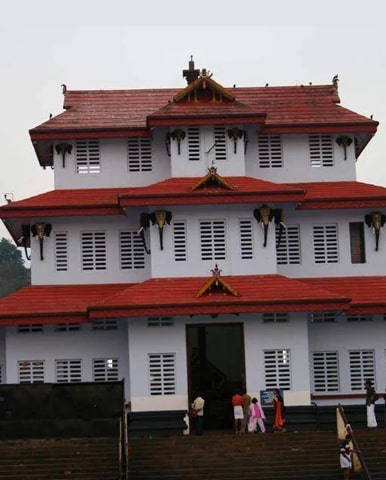
The Padmanabhaswamy temple is a Hindu temple located in Thiruvananthapuram, the state capital of Kerala, India. The name of the city of Thiruvananthapuram in Malayalam translates to "The City of Lord Ananta",referring to the deity of the Padmanabhaswamy temple. The temple is built in an intricate fusion of the Chera style and the Dravidian style of architecture, featuring high walls, and a 16th-century gopura.While the Ananthapura temple in Kumbla is considered the original seat of the deity ("Moolasthanam"), architecturally to some extent, the temple is a replica of the Adikesava Perumal temple in Thiruvattar.
The principal deity Padmanabhaswamy (Vishnu) is enshrined in the "Anantha Shayana" posture, the eternal yogic sleep on the serpent Adi Shesha.Padmanabhaswamy is the tutelary deity of the royal family of Travancore. The titular Maharaja of Travancore, Moolam Thirunal Rama Varma, is the trustee of the temple.
Several extant Hindu Texts, like the Vishnu Purana,Brahma Purana,Matsya Purana,Varaha Purana,Skanda Purana,Padma Purana,Vayu Purana, Bhagavata Purana and the Mahabharata mention this shrine.The Temple has been referred to in the (only recorded) Sangam period of literature between 500 BCE and 300 CE several times.Many conventional historians and scholars are of the opinion that one of the names that the Temple had, "The Golden Temple", literally was in cognizance of the fact that the Temple was already unimaginably wealthy by that point.Many extant pieces of Sangam Tamil literature and poetry, and later works of the 9th century of Tamil poet-saints like Nammalwar, refer to the temple and the city as having walls of pure gold.At some places, both the temple and the entire city are often eulogised as being made of gold, and the temple as heaven.
The temple is one of the 108 principal Divya Desams ("Holy Abodes") in Vaishnavism, and is glorified in the Divya Prabandha. The Divya Prabandha glorifies this shrine as being among the 13 Divya Desam in Malai Nadu (corresponding to present-day Kerala with Kanyakumari District).The 8th century Tamil poet Alvar Nammalvar sang the glories of Padmanabha.The Ananthapuram temple in Kasaragod is believed to be the original seat of Padmanabhaswamy ("Moolasthanam").
It is believed that Parasurama purified and venerated the idol of Sree Padmanabhaswamy in Dvapara Yuga. Parasurama entrusted 'Kshethra karyam' (Administration of the Temple) with seven Potti families – Koopakkara Potti, Vanchiyoor Athiyara Potti, Kollur Athiyara Potti, Muttavila Potti, Karuva Potti, Neythasseri Potti and Sreekaryathu Potti. King Adithya Vikrama of Vanchi (Venad) was directed by Parasurama to do 'Paripalanam' (Protection) of the Temple. Parasurama gave the Tantram of the Temple to Tharananallur Namboothiripad. This legend is narrated in detail in 'Kerala Mahathmyam' which forms part of 'Brahmanda Puranam'.
Another version regarding the consecration of the Main Idol of the Temple relates to the legendary sage Vilvamangalathu Swamiyar. Swamiyar, who resided near Ananthapuram Temple in Kasaragod District, prayed to Lord Vishnu for his darshan or "auspicious sight". The Lord is believed to have come in the guise of a little boy who was mischievous. The boy defiled the Idol which was kept for Puja. The sage became enraged at this and chased away the boy who disappeared before him. Realizing the boy was no ordinary mortal, the sage wept for forgiveness and asked for another darshan as a sign. He heard a voice say "If you want to see me come to the Anathavana (the unending forest or ananthakadu). After a long search, when he was walking on the banks of Laccadive Sea, he heard a pulaya lady warning her child that she would throw him in Ananthankadu. The moment the Swami heard the word Ananthankadu he was delighted. He proceeded to Ananthankadu based on the directions of the lady of whom he enquired. The Sage reached Ananthankadu searching for the boy. There he saw the boy merging into an Iluppa tree (Indian Butter Tree). The tree fell down and became Anantha Sayana Moorti (Vishnu reclining on the celestial snake Anantha). But the edifice that the Lord assumed was of an extraordinarily large size, with His head at Thiruvattar near Thuckalay Tamil Nadu, Body or Udal at Thiruvananthapuram, and lotus-feet at Thrippadapuram near Kulathoor and Technopark (Thrippappur), making him some eight miles in length. The Sage requested the Lord to shrink to a smaller proportion that would be thrice the length of his staff. Immediately the Lord shrank to the form of the Idol that is seen at present in the Temple. But even then many Iluppa trees obstructed a complete vision of the Lord. The Sage saw the Lord in three parts – thirumukham, thiruvudal and thrippadam. Swami prayed to Padmanabha to be forgiven.
The Swami offered Rice Kanji and Uppumanga (salted mango pieces) in a coconut shell to the Perumal which he obtained from the pulaya woman. The spot where the Sage had darsan of the Lord belonged to Koopakkara Potti and Karuva Potti. With the assistance of the reigning King and some Brahmin households a Temple was constructed.The Ananthankadu Nagaraja Temple still exists to the north west of the Padmanabhaswamy Temple. The Samadhi (final resting place) of the Swamiyar exists to the west of the Padmanabhaswamy Temple. A Krishna Temple was built over the Samadhi. This Temple, known as Vilvamangalam Sri Krishna Swami Temple, belongs to Thrissur Naduvil Madhom.
Mukilan, a Muslim marauder, invaded vast chunks of Venad in 1680 AD.He destroyed Budhapuram Bhaktadasa Perumal Temple owned by Neythasseri Potti. Mukilan had plans to plunder the vaults of Sree Padmanabhaswamy Temple and destroy it. But he was dissuaded from doing so by local Pathans loyal to the Royals of Venad. Padmanabhan Thampi, arch rival of Anizhom Thirunal Marthanda Varma, marched to Thiruvananthapuram with his forces and tried to loot the vaults of the Temple. Thampi stayed at Sri Varaham and sent his mercenaries to Sree Padmanabhaswamy Temple. It is said that divine serpents materialised in hundreds and scared away Thampi's men. Emboldened by this heavenly intervention, Pallichal Pillai and local people opposed Padmanabhan Thampi and ensured that the mercenaries did not proceed with the misadventure.
Source : Wikipedia
TrasnportBy Road: KSRTC, Thiruvanathapuram (1km)
By Train: Railway Station Thiruvanathapuram (1km)
By Air: Nearest airport is Thiruvanathapuram (4 Km)