Konark Sun Temple, Konark
Konark Sun Temple (Konark Surya Mandir) is a 13th-century CE(year 1250) Sun temple at Konark about 35 kilometres (22 mi) northeast from Puri on the coastline of Odisha, India.The temple is attributed to king Narasimhadeva I of the Eastern Ganga Dynasty about 1250 CE.
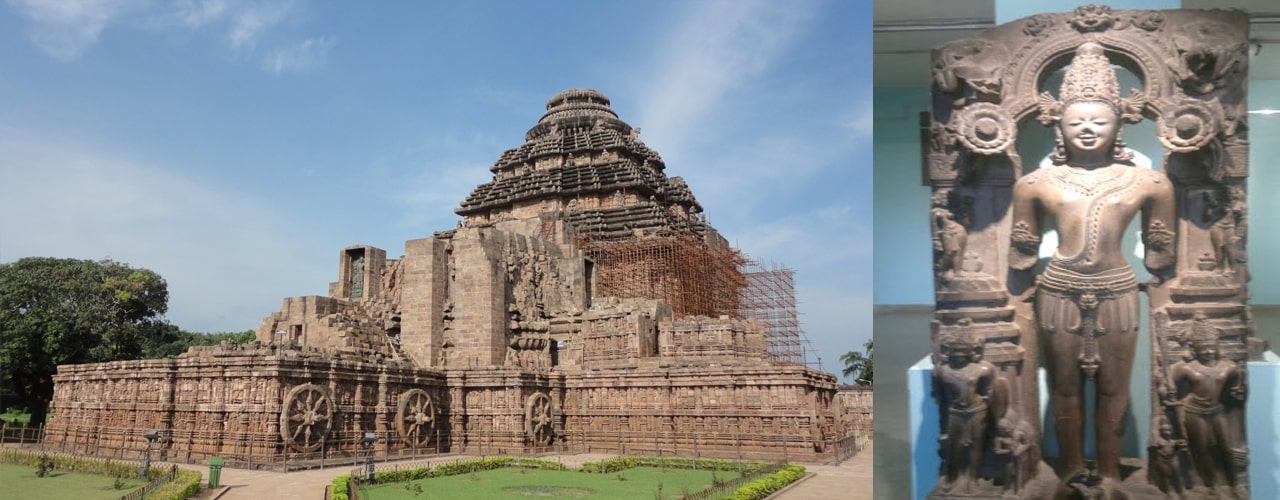
Dedicated to the Hindu Sun God Surya, what remains of the temple complex has the appearance of a 100-foot (30 m) high chariot with immense wheels and horses, all carved from stone. Once over 200 feet (61 m) high,much of the temple is now in ruins, in particular the large shikara tower over the sanctuary; at one time this rose much higher than the mandapa that remains. The structures and elements that have survived are famed for their intricate artwork, iconography, and themes, including erotic kama and mithuna scenes. Also called the Surya Devalaya, it is a classic illustration of the Odisha style of Architecture or Kalinga Architecture.
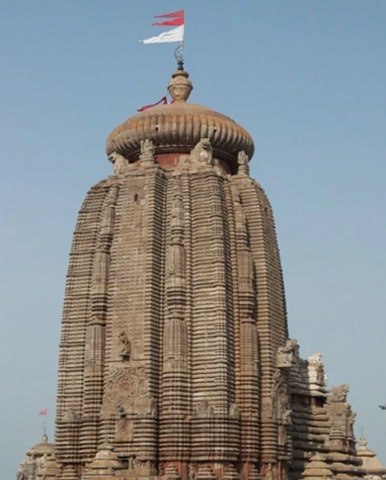
The cause of the destruction of the Konark temple is unclear and still remains a source of controversy.Theories range from natural damage to deliberate destruction of the temple in the course of being sacked several times by Muslim armies between the 15th and 17th centuries.This temple was called the "Black Pagoda" in European sailor accounts as early as 1676 because it looked a great tower which appeared black.Similarly, the Jagannath Temple in Puri was called the "White Pagoda". Both temples served as important landmarks for sailors in the Bay of Bengal.The temple that exists today was partially restored by the conservation efforts of British India-era archaeological teams. Declared a UNESCO world heritage site in 1984,it remains a major pilgrimage site for Hindus, who gather here every year for the Chandrabhaga Mela around the month of February.
Konark Sun Temple is depicted on the reverse side of the Indian currency note of Rs 10 to signify its importance to Indian cultural heritage.
The Konark Sun Temple was built in 1250 A.D. during the reign of the Eastern Ganga King Narsimhadeva-1 from stone in the form of a giant ornamented chariot dedicated to the Sun god, Surya. In Hindu Vedic iconography Surya is represented as rising in the east and traveling rapidly across the sky in a chariot drawn by seven horses. He is described typically as a resplendent standing person holding a lotus flower in both his hands, riding the chariot marshaled by the charioteer Aruna.The seven horses are named after the seven meters of Sanskrit prosody: Gayatri, Brihati, Ushnih, Jagati, Trishtubha, Anushtubha, and Pankti.Typically seen flanking Surya are two females who represent the dawn goddesses, Usha and Pratyusha. The goddesses are shown to be shooting arrows, a symbol of their initiative in challenging the darkness.The architecture is also symbolic, with the chariot's twelve pairs of wheels corresponding to the 12 months of the Hindu calendar, each month paired into two cycles (Shukla and Krishna).
The Konark temple presents this iconography on a grand scale. It has 24 elaborately carved stone wheels which are nearly 12 feet (3.7 m) in diameter and are pulled by a set of seven horses.When viewed from inland during the dawn and sunrise, the chariot-shaped temple appears to emerge from the depths of the blue sea carrying the sun.
The temple plan includes all the traditional elements of a Hindu temple set on a square plan. According to Kapila Vatsyayan, the ground plan, as well the layout of sculptures and reliefs, follow the square and circle geometry, forms found in Odisha temple design texts such as the Silpasarini.This mandala structure informs the plans of other Hindu temples in Odisha and elsewhere.
The main temple at Konark, locally called the deul, no longer exists. It was surrounded by subsidiary shrines containing niches depicting Hindu deities, particularly Surya in many of his aspects. The deul was built on a high terrace.The temple was originally a complex consisting of the main sanctuary, called the rekha deul, or bada deul (lit. big sanctum).In front of it was the bhadra deul (lit. small sanctum), or jagamohana (lit. assembly hall of the people) (called a mandapa in other parts of India.). The attached platform was called the pida deul, which consisted of a square mandapa with a pyramidal roof.All of these structures were square at their core, and each was overlain with the pancharatha plan containing a variegated exterior.The central projection, called the raha, is more pronounced than the side projections, called kanika-paga, a style that aims for an interplay of sunlight and shade and adds to the visual appeal of the structure throughout the day. The design manual for this style is found in the Silpa Sastra of ancient Odisha.
Source : Wikipedia
TrasnportBy Road: Konark is 65kms from Bhubaneswar via pipili (approx 2 hours) and 35kms from Puri (approx. 1 hour) on marine drive road. Konark is connected by good all weather motorable roads. Regular Bus services are operating from Puri and Bhubaneswar. Besides Public transport Private tourist bus services and taxis are also available from Puri and Bhubaneswar. For internal transport, Auto rickshaws and Cycle rickshaws are available near Konark temple.
By Train: The nearest railway stations are Bhubaneswar and Puri. Konark is 65kms from Bhubaneswar via pipili and 35kms from Puri on marine drive road. Puri is the last point of South Eastern Railway. Puri & Bhubaneswar hava fast and superfast train connections to Kolkata, New Delhi, Chennai, Banglore, Mumbai and other major cities and towns of the country.
By Air: Konark is 65 km from the domestic airport which is in Bhubaneswar, the capital city of Odisha. Bhubaneswar is connected by air with flights to major Indian cities like New Delhi, Kolkata, Visakhapatnam, Chennai and Mumbai etc. All major domestic airlines like Indigo, GoAir, Air India have daily flights to/from Bhubaneswar. The nearest International Airport is at Calcutta (Kolkata).